
The technology is no longer a future concept for global miner BHP, as it finds practical ways to apply it along the mining value chain.
Edited by Josephine Patterson
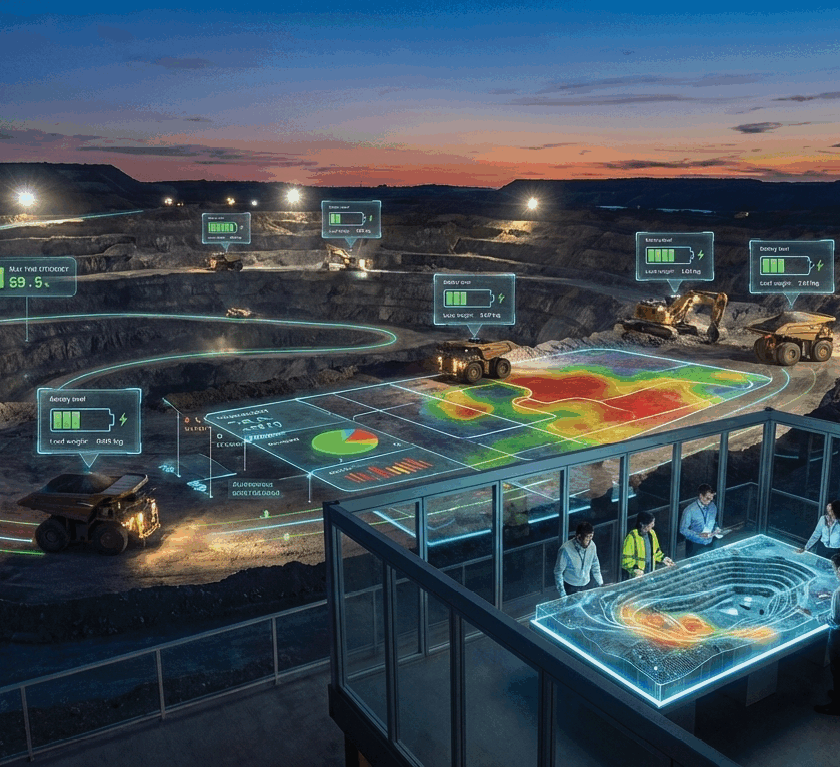
BHP recently announced that artificial intelligence is increasingly influencing its operations, as the global miner seeks practical ways to enhance safety, reliability and performance while addressing the growing demand for critical minerals.
From supporting teams to identifying new mineral deposits to running large processing plants and transport networks, AI is moving beyond experimentation and becoming part of day-to-day operations across BHP’s global portfolio.
“AI is no longer a future concept for BHP,” affirmed Johan van Jaarsveld, BHP chief technical officer. “It is increasingly part of how we run our operations. Our focus is on applying it in practical, governed ways that support our teams in achieving safer, more productive and more reliable outcomes.”
How AI is being used
AI is being used throughout the mining value chain to help BHP teams manage the complexity and variability of large-scale, continuous operations.
Finding and understanding resources. In exploration, AI and advanced analytics are being used to help geoscientists analyze large volumes of geological data more efficiently. By reviewing decades of historical information alongside new data, these tools can help teams identify areas of interest earlier and with greater confidence. This supports better decision-making and can help reduce exploration risk, while decisions on where and how to invest remain with people.
Running processing plants more steadily. One of the biggest challenges in mining is natural variability, particularly changes in the type and hardness of ore. For example, at Escondida in Chile, AI-supported digital models are helping operators better understand how changes in ore characteristics or operating settings are likely to affect plant performance. In simple terms, these digital models allow teams to test changes virtually, using live and historical data, before applying them in the real plant.
Improving reliability from the pit to the port. AI is also being used to support reliability across mining and transport systems, where even short disruptions can have a significant impact. For example, computer-vision systems are used at operations in Chile and Western Australia to help detect issues such as spillage, oversized material or foreign objects on conveyors, crushers and rail loading systems. Using existing camera infrastructure, these tools can alert teams early and, in some cases, trigger pre-programmed automatic responses to help prevent equipment damage and avoid unplanned downtime. This helps keep material moving safely and consistently, while reducing the need for teams to work in higher-risk situations.
Making safety reporting faster and more effective. AI is also supporting safety outcomes for teams on the frontline. For example, a voice-to-text mobile application allows employees to log hazards instantly while in the field. Reports are automatically geotagged and linked to historical incident data, providing rapid digital risk assessments that help teams respond sooner and prioritize controls.
Looking ahead
BHP has been applying AI and advanced analytics across its operations for several years, with use increasing as data quality, platforms and internal capability have improved.
As this work continues, teams across the business are identifying further opportunities where AI can support day-to-day operations, sharing what works and extending proven approaches where appropriate, supported by strong governance and clear accountability.
“AI is helping us understand our operations in new ways and act earlier, with greater confidence. What excites us is the scale of opportunity ahead as we continue to apply these tools responsibly – learning, improving and expanding what’s possible across our operations,” said Johan van Jaarsveld, BHP chief technical officer.
Meeting growing demand
Demand for copper and other critical minerals continues to grow, driven by electrification, the energy transition, and the rapid expansion of data centers and digital infrastructure. Copper is a foundational material for this growth – essential to power generation, transmission and cooling, and increasingly critical to the data centres that underpin artificial intelligence and the digital economy.
At the same time, bringing new supply online often involves long development timeframes, complex operating environments and significant execution risk. Projects can take many years to progress from discovery to production, and operating conditions become more challenging as ore bodies are deeper, more variable and harder to access.
In this context, emerging technologies, including AI, are increasingly being used at BHP to help teams manage variability, anticipate issues earlier and support more consistent performance across large, interconnected operations.